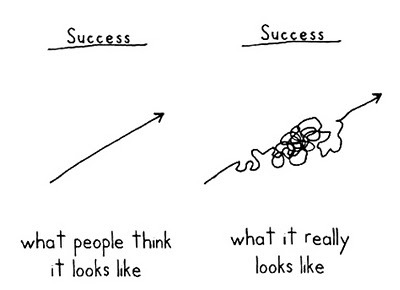
I'm going to tell you the story of my failures at UF as an engineering major, and why they were the best thing that ever happened to me.
To preface this story, let's go back a few years.
I was always the "smart kid." From the time I was in second grade I was in the school's gifted program, I went to an IB middle school, I dual enrolled in high school, and graduated as valedictorian with a 5.3 GPA and 36 hours of college credit. I always loved math. In first grade I used to do my math assignments as fast as I could and ask the teacher for extra problems to solve.... NERD, I know.
In addition to this, my Dad was a mechanic and I'm his only child so I grew up working on cars. When I got into high school we had academies to choose from, almost like choosing a major in college. I chose both the engineering and automotive academies. Putting two and two together I decided I wanted to be an automotive engineer and design car engines.
I was ecstatic to get accepted to UF, and was so ready to move out of my small town and go to college. Since school had always come so naturally to me, I thought "this will be a breeze."
LOL is all I have to say about that one.
You know when you have your whole life figured out (or so you think) and then it. all. falls. apart....
Yeah, I immediately felt like a tiny minnow lost in the ocean when I began taking classes with thousands of students in auditoriums here at UF. My first semester I dropped calculus 1 and failed chemistry 1. It was such a shock going from being the smart kid with her whole career planned out, to being a failure...
I retook those classes and passed.
I retook calculus 2 THREE TIMES, before passing, and then took differential equations back home at FGCU and got an A (eye-roll).
In case you can't tell I am extremely hard headed and was not going to let someone tell me I couldn't do something, I wasn't going to accept failure, give up, or change my major unless it was on my terms.
Some time went by, and I had 2 years of college under my belt. I thought I had it figured out. Then physics two and statics showed me I still knew nothing. In addition, I rushed an engineering fraternity, thinking it'd be a great networking opportunity for me, I'd make smart engineering friends, get internships, etc.
Then I got voted out of the fraternity during my pledge semester. FAILURE STRIKES AGAIN.
This was it. This was the turning point for me.
This whole time I was struggling in engineering, I was working out 6 days a week, weight training, doing cardio, meal prepping, teaching my friends about health/fitness etc. It was m hobby, my passion.
I finally decided I had enough with engineering, it wasn't for me. But I also knew I couldn't change my major to something like business, or something else I wasn't interested in... SO I decided it was time to turn my hobby and my passion into my career. I didn't know how, but I decided to go for it and figure it out along the way.
So in summary... all of these FAILURES made me feel discouraged, and lost, and like my life was falling apart, when really it was falling together.
That cliche saying "when one door closes, another one opens"... I believe it.
I now LOVE what I'm studying. I appreciate school, my major, my classes and my professors everyday. I'm succeeding and have made the dean's list two semesters in a row. I got a really competitive internship position at a gym! I'm a certified personal trainer, I'm already selling workout plans, training clients in person, and helping people with their diet/nutrition. My interests/hobbies/passion have become my life. And now I'm a freaking entrepreneur, building my own brand so I never have to work a day in my life. How freaking cool is that?
I now tell this story with pride. I'm not shameful of my failures. I'm grateful that this is how things turned out. And in turn, in the face of struggle and adversity, I now have more confidence that everything's going to be okay, even if I don't know what that looks like yet.
Wednesday, April 11, 2018
Thursday, April 5, 2018
Putting it all Together
Opportunity:
The opportunity I’ve chosen to pursue with my business plan
is providing the service of fitness coaching.
The need is fitness coaching. The
niche I’m targeting is those who need a coach because they want to
compete. These individuals have an extremely
specific goal, with a time-frame, the dedication and financial means to pursue
it. This need can also pertain to
individuals who struggle reaching their fitness goals on their own and simply
don’t know where to start, or need the motivation and accountability that a
coaching service would provide them. All
of these people have a few things in common- they need help achieving their
fitness goals, they have a specific goal, they have the determination and
financial means required to achieve this goal.
This market is not defined geographically- as this could
pertain to people all over the world. My
market may be defined demographically, in that I presume most of my clients
will be female. Typically in the fitness
industry males work with male coaches and females work with female coaches –
not always, and I would coach males as well, but for the MOST part, my market
will be female.
Since there will be an application process to work with me
as a coach, and individuals must fit certain criteria, and I plan to target a
specific niche, my opportunity may not be considered “big.” At least in terms
of number of clients who will receive this service. Quality of service provided also matters so I
can’t take tons of clients at once. So
because of this selective and limited process, my opportunity is not “big.”
Innovation:
My innovation is the service of fitness coaching. This service already exists so it is
incrementally innovative. When a client
applies and is selected for fitness coaching with me, they will receive specifically
tailored nutrition and training regimen from me. They will receive specific macronutrient targets
to hit daily, and prescribed resistance training and cardio workouts to suit
their goals. They will have weekly
communication with me via email where they will send me data (weight, macros,
training) from the week, along with progress photos and a video clip discussing
how they felt during the week. I will
respond to this with any needed adjustments and advice for the following
week. This exchange will continue for
the agreed period in which they paid for coaching.
This service will be pretty costly. It will cost $100 per
week for the agreed upon duration, so 24 weeks = $2400.
Because this service is so limited, specific, and expensive,
I will also sell non-customized workout plans on my website for a one-time
purchase of $50-$100. I also plan to
sell Ebooks, such as “Tracking Macros for Beginners” and “How to grow your
Glutes: A scientific approach” as educational material.
Venture Concept:
Because of my knowledge, degree, certifications, and
experience I will successfully get people to their fitness goals. When I do that, they will be pleased with
their results and write testimonies that I can share on my website and social
media accounts to prove my credibility to others. This will create interest in me as a coach
and my fitness coaching service.
I think people will switch to my service over other coaches’
services because well, there are some truly shitty coaches out there. Lots of competition prep coaches prescribe
overly restricted meal plans to competitors and have them doing hours of fasted
cardio and other bullshit that isn’t scientifically proven effective.
With my scientific evidence based approach to diet and
exercise, clients of mine will receive the best possible service with the least
amount of suffering. They will be
educated as to why I implement the strategies I do and how they work. I won’t blindly prescribe them hours of
cardio and a diet of straight tilapia and asparagus. This service will be innovative due to my
scientific approach.
Price is important in my concept, as lots of people can’t afford
coaches. But then again, lots of people
can. And based on what I’ve heard from
other coaches, if everyone says ‘yes’ to the price of your service you’re too
cheap. Also, when there is somewhat of a
financial investment in one’s fitness goals, it serves as another means of
motivation and accountability for the individual. Sounds weird, but it’s true. So I plan to have pretty high prices, that
not everyone can afford, but is still reasonable and comparable to other
coaches’ prices in the industry.
·
Most important resource- My experience, and the
result I get my clients. Competitors can’t
copy that without my past experiences and knowledge. The proof is in the pudding.
·
What’s next- When I build my brand large enough,
I plan to sell merchandise. Maybe some
branded apparel, along with gym accessories- resistance bands, shaker cups etc.
·
What’s next for me- I love this question. In five years I hope to have built my
personal brand so large that I’m a well accredited and sought after coach with
clients competing at the pro level. I also want to be a pro level competitor at
that point in time, and be selling lots of Ebooks, and workout guides on my
website educating and helping people reach their fitness goals. Further down
the line when I’m ready to have a family and settle down a little, I want to
own my own gym. Building this brand will
allow me the financial means to open a gym which is my end goal.
Wednesday, April 4, 2018
What's Next
Existing Market.
Step 1:
I've mentioned this in previous posts. The main focus of my business plan is to provide the service of one on one coaching for clients with specific goals, 100% dedication, and the financial means to afford coaching. Since this is a small niche, I plan to differentiate my offered services by selling non-customized workout plans on my website. This product will still apply to the same market- people with fitness goals- but it is a cheaper option that requires less dedication, commitment etc.
Step 2:
I spoke to three friends of mine who all have very specific fitness goals and currently have, or have had coaches in the past. When I explained to them my business plan (which several coaches/social media influencers have already proven to be successful when executed properly) here are what they suggested was next for me:
Merchandise - One of my friends mentioned selling branded merchandise. Again, imagine Steve Cook selling swoldier nation T-shirts and bicep blasters, or Katy Hearn selling resistance bands and hoodies.
Ebooks- Another friend suggested selling Ebooks such as nutrition guides, How to track your macros, what to know before competing in the NPC, and other relevant fitness subjects.
App- The last friend suggested creating an app with follow-along workouts, or an interactive discussion board for fitness questions/answers.
When I explained offering both one on one coaching and the less epensive, one time purchase workout plans, they said it was a great idea. They all agreed not everyone needs or has the money to pay for a coach so this is a great option to offer. They also said that I can do that, and sell merchandise, Ebooks, or have an app, in addition to my plan, (and one day I hope to offer all of the above.)
Step 3:
I believe all of these ideas are relevant and make sense in my business venture, and existing market. I think over time as I build social media platforms and gain a following/audience I can slowly incorporate these ideas and further differentiate my offered products/services.
New Market.
Step 1:
Since my existing market is those who have very specific fitness goals, have the time and dedication to pursue those goals, and have the financial means of doing so, the radically different market would be overweight individuals, maybe people who have never been in a gym before, who don't understand the general concepts of nutrition, and don't have financial means to hire a coach.
Step 2:
To target this market I could (this is pretty out there but hang with me) travel to big cities/highly populated areas and hold free fit-camps... For example, hold a free workout session, with a Q&A seminar, and possibly even partner with healthy food services in that area and/or supplement companies to give out free samples. This would provide value to this market by providing education about health/fitness and available services in their area, as well as serve as a marketing tool for my personal brand and the businesses that participate.
Step 3:
I spoke to two "un-fit" individuals who I think would fit in this market and one suggested offering a free week of workouts, or few free weeks of coaching for them to see if they like it and can stick to it before they purchase something. I thought this was a good idea that could easily be done.
The other individual said my plan sounded good, and that they would be interested in something like that in their area. They did not make suggestions as to what to adapt about my business plan.
Reflection:
Before this I hadn't truly considered this market. I always thought I could help the overweight population get healthier and lose weight, but I didn't think about strategically marketing them since my personal interest is in competing and that's a very small and specific niche.
Surprisingly I do think this market is as attractive as my existing market, because theres the potential to really change and impact peoples lives in a big way. I will definitely consider this moving forward with my business plan and try to offer lots of free and introductory options and try to market this market more (lol).
Thursday, March 29, 2018
Elevator Pitch 3
https://www.youtube.com/watch?v=3YOKH7jpQWI&feature=youtu.be
I didn't really receive feedback to change much. I received positive feedback, about speaking directly to "you" and making my message seem personal. Someone said I should dress more professional, but I politely disagree, no one wants to take fitness advice from someone in a suit and tie.
Finally, I chose a different area to record this time, with better lighting, and I prefer my relaxed body language in this one. Also, I was way less nervous to record this one after doing the previous one, but also because I did it the day before rather than a few hours before the due date (whoops).
I didn't really receive feedback to change much. I received positive feedback, about speaking directly to "you" and making my message seem personal. Someone said I should dress more professional, but I politely disagree, no one wants to take fitness advice from someone in a suit and tie.
Finally, I chose a different area to record this time, with better lighting, and I prefer my relaxed body language in this one. Also, I was way less nervous to record this one after doing the previous one, but also because I did it the day before rather than a few hours before the due date (whoops).
Monday, March 26, 2018
Your Venture’s Unfair Advantage
What I already have...
1. Credibility- degree/certifications (Human capital)
V- I think this is very valuable in my field
R- This isn't that rare, there are lots of people in the fitness industry with degrees and other certifications
I- This is imitable, but not easily imitable.. Anyone can get these credentials but they take time and money to obtain.
N- Knowledge through a degree and certifications can't really be substituted with anything else, either you get these credentials or you don't.
2. Experience- competing (Human Capital)
V- very valuable, some may argue even more valuable than credentials
R- experience competing is somewhat rare, not everyone can say they've competed before, but the sport is growing, and quite a few people have
I- Sure, this is imitable if one is willing to commit to a competition, but it's not easy... It takes a huge amount of time, financial resources, and dedication to compete in body building.
N- non substitutable, again, you either compete or you don't. I don't think there is a substitute for this one.
3. Passion (Human Capital)
V- valuable... but a lot of people are passionate about health and fitness so idk if this is enough to make me stand out
R- a lot of people have the same passion as me, so I guess it isn't very rare.
I- people can develop a passion for health/fitness so it's easily imitable.
N- non-substitutable... idk how to answer this one. Pretty sure you can't substitute anything for passion.
4. Social capital- ex. relationships with my coaches
V- Very valuable to know people higher up than myself in the industry
R- I'd say it's somewhat rare, at least for where I am now.
I- it is imitable, because people can build relationships
N- I don't think there is a substitute for having a good network of people you look up to.
5. Social capital- friends with common interests - a network/support system
V- The circle of friends I've built is valuable because we all have similar goals, and experiences and we teach and support and motivate each other.
R- Idk if this is rare... I feel like most people connect with similar minded people/ people who share your goals
I- imitable... I don't think you can imitate friendship/social network
N- non substitutable... I don't think you can substitute for this either. I think having a friend group like this offers an individual different opinions, and experiences, and can be substituted by anything else.
Things I'm working on developing...
6. Financial resources (LOL)
V- financial resources are extremely valuable, regardless of the product/service/business offered. Money helps make things happen!
R- I don't think money is rare, everyone has it.
I- Imitable... Idk everyone has money?
N- Nope, there's no substitute for money.
7. Mentor (social capital)
V- Having a mentor teach and guide you in the area of your interest is extremely valuable and could provide you with lots of other resources
R- I think mentors are somewhat rare, not that many people build a relationship with someone more successful than them.
I- I don't think this one is imitable.
N- Nor do I believe this is substitutable
8. technological skills
V- It's very valuable and important to have some advanced technological skills as an entrepreneur in the fitness industry. You must be able to take and post photos to social media, design and possibly build your own website (or hire someone to), as well as edit/upload videos to youtube etc.
R- This isn't super rare because pretty much all successful people on social media know how to do these things, or hire people to do it for them, however it is crucial to building your own brand
I- this skill is imitable because it can be learned. It isn't easy to learn all these different technological skills and may be time consuming (or expensive to hire someone instead), but it can be done.
N- This is substitutable if you hire someone to do these things for you, but then you have to have the financial resources available to afford these services.
9. credible physique
V- Having a credible physique is super valuable in the fitness industry, no one wants to be trained by someone who doesn't look the part.
R- I don't think this is rare because most trainers understand this and practice what they preach
I- This is imitable because you can change your physique if it's not what you want.
N- There isn't a substitute for looking good...
10. Social media competency
V- In my industry it's very valuable (and pretty much crucial) to be competent with social media and use it for marketing and branding yoruself
R- Rare... This unfortunately isn't rare at all, which is why it's crucial in my opinion, everyone in this industry uses social media as a marketing tool.
I- This is imitable in the sense that other people can build their own brands on social media... Instagram is a huge platform used by lots of business now.
N- I guess there are sort of substitutes here... like sending out a newsletter via email, using a blog or personal website, but I think these things should be used in addition to social media. Because social media keeps you relevant.
My top resource is probably my experience. Like I mentioned, a lot of people would say that experience surpasses credentials. Not all good coaches have degrees and certifications because its not regulated or required... However, having experience is a substitute for having these credentials, and can prove your credibility. I think experience is the one thing that will set me apart from other coaches.
1. Credibility- degree/certifications (Human capital)
V- I think this is very valuable in my field
R- This isn't that rare, there are lots of people in the fitness industry with degrees and other certifications
I- This is imitable, but not easily imitable.. Anyone can get these credentials but they take time and money to obtain.
N- Knowledge through a degree and certifications can't really be substituted with anything else, either you get these credentials or you don't.
2. Experience- competing (Human Capital)
V- very valuable, some may argue even more valuable than credentials
R- experience competing is somewhat rare, not everyone can say they've competed before, but the sport is growing, and quite a few people have
I- Sure, this is imitable if one is willing to commit to a competition, but it's not easy... It takes a huge amount of time, financial resources, and dedication to compete in body building.
N- non substitutable, again, you either compete or you don't. I don't think there is a substitute for this one.
3. Passion (Human Capital)
V- valuable... but a lot of people are passionate about health and fitness so idk if this is enough to make me stand out
R- a lot of people have the same passion as me, so I guess it isn't very rare.
I- people can develop a passion for health/fitness so it's easily imitable.
N- non-substitutable... idk how to answer this one. Pretty sure you can't substitute anything for passion.
4. Social capital- ex. relationships with my coaches
V- Very valuable to know people higher up than myself in the industry
R- I'd say it's somewhat rare, at least for where I am now.
I- it is imitable, because people can build relationships
N- I don't think there is a substitute for having a good network of people you look up to.
5. Social capital- friends with common interests - a network/support system
V- The circle of friends I've built is valuable because we all have similar goals, and experiences and we teach and support and motivate each other.
R- Idk if this is rare... I feel like most people connect with similar minded people/ people who share your goals
I- imitable... I don't think you can imitate friendship/social network
N- non substitutable... I don't think you can substitute for this either. I think having a friend group like this offers an individual different opinions, and experiences, and can be substituted by anything else.
Things I'm working on developing...
6. Financial resources (LOL)
V- financial resources are extremely valuable, regardless of the product/service/business offered. Money helps make things happen!
R- I don't think money is rare, everyone has it.
I- Imitable... Idk everyone has money?
N- Nope, there's no substitute for money.
7. Mentor (social capital)
V- Having a mentor teach and guide you in the area of your interest is extremely valuable and could provide you with lots of other resources
R- I think mentors are somewhat rare, not that many people build a relationship with someone more successful than them.
I- I don't think this one is imitable.
N- Nor do I believe this is substitutable
8. technological skills
V- It's very valuable and important to have some advanced technological skills as an entrepreneur in the fitness industry. You must be able to take and post photos to social media, design and possibly build your own website (or hire someone to), as well as edit/upload videos to youtube etc.
R- This isn't super rare because pretty much all successful people on social media know how to do these things, or hire people to do it for them, however it is crucial to building your own brand
I- this skill is imitable because it can be learned. It isn't easy to learn all these different technological skills and may be time consuming (or expensive to hire someone instead), but it can be done.
N- This is substitutable if you hire someone to do these things for you, but then you have to have the financial resources available to afford these services.
9. credible physique
V- Having a credible physique is super valuable in the fitness industry, no one wants to be trained by someone who doesn't look the part.
R- I don't think this is rare because most trainers understand this and practice what they preach
I- This is imitable because you can change your physique if it's not what you want.
N- There isn't a substitute for looking good...
10. Social media competency
V- In my industry it's very valuable (and pretty much crucial) to be competent with social media and use it for marketing and branding yoruself
R- Rare... This unfortunately isn't rare at all, which is why it's crucial in my opinion, everyone in this industry uses social media as a marketing tool.
I- This is imitable in the sense that other people can build their own brands on social media... Instagram is a huge platform used by lots of business now.
N- I guess there are sort of substitutes here... like sending out a newsletter via email, using a blog or personal website, but I think these things should be used in addition to social media. Because social media keeps you relevant.
My top resource is probably my experience. Like I mentioned, a lot of people would say that experience surpasses credentials. Not all good coaches have degrees and certifications because its not regulated or required... However, having experience is a substitute for having these credentials, and can prove your credibility. I think experience is the one thing that will set me apart from other coaches.
Wednesday, March 21, 2018
Reading Reflection number 2
How to Fail at Almost Everything and Still Win Big, Scott Adams
1) What was the general theme or argument of the book?
Systems > Goals
For the most part, each chapter of this book had a different theme, however I think one main theme throughout was that it's better to have systems than goals. What Adams means by this, is that instead of focusing our mind/energy on goals or the end-result, we should be focusing on the systems we need to implement daily, to get us there. By focusing on the systems/processes of our daily lives, we can celebrate small wins, and have feelings of success/accomplishment now, rather than waiting on this "goal" that seems so far in the distance. Adams says that this leads to a happier life, and I believe it. Focusing on daily wins, daily systems, daily excellence, will create a life of excellence.
1) What was the general theme or argument of the book?
Systems > Goals
For the most part, each chapter of this book had a different theme, however I think one main theme throughout was that it's better to have systems than goals. What Adams means by this, is that instead of focusing our mind/energy on goals or the end-result, we should be focusing on the systems we need to implement daily, to get us there. By focusing on the systems/processes of our daily lives, we can celebrate small wins, and have feelings of success/accomplishment now, rather than waiting on this "goal" that seems so far in the distance. Adams says that this leads to a happier life, and I believe it. Focusing on daily wins, daily systems, daily excellence, will create a life of excellence.
2) How did the book, in your opinion, connect with and enhance what you are learning in ENT 3003?
This book talks about the mindset required to be a happy, successful, and fulfilled entrepreneur. In my opinion we learn more of the "business" side of things in ENT 3003, the practical, logical things that go into developing a business model, and those are important. But, this book talks about the mindset and habits, and more "emotional" side of being an entrepreneur. I really enjoyed with this book, I love self development books/podcasts and I feel like this kind of fits that mold. Even if you aren't an entrepreneur or in this class, you could benefit from reading this book.
3) If you had to design an exercise for this class, based on the book you read, what would that exercise involve?
This probably sounds really cheesy but I would ask students to write about a failure they've experienced in their lives, and what they learned from it, and how it turned out to be a good thing in the end.
I personally would talk about how I "failed" at my engineering career here at UF, but then I changed my major to APK and am now doing what I'm passionate about everyday and building a life for myself where I'll be much happier than if I became an engineer.
This moment of "everything is falling apart" turned into "everything is falling into place" and I think a lot of entrepreneurs have had experiences like this, where failure at something, meant success at something else.
This probably sounds really cheesy but I would ask students to write about a failure they've experienced in their lives, and what they learned from it, and how it turned out to be a good thing in the end.
I personally would talk about how I "failed" at my engineering career here at UF, but then I changed my major to APK and am now doing what I'm passionate about everyday and building a life for myself where I'll be much happier than if I became an engineer.
This moment of "everything is falling apart" turned into "everything is falling into place" and I think a lot of entrepreneurs have had experiences like this, where failure at something, meant success at something else.
4) What was your biggest surprise or 'aha' moment when reading the book? In other words, what did you learn that differed most from your expectations?
I was surprised when Adams talked about how deciding is more important than wishing... That statement didn't surprise me, but earlier in this class when asked what advice I would give to other students taking this class in the future, I said "decide what grade you want to get in this class, do the work to get it, that's it." Adams said in this book "1. Decide what you want. 2. Figure out what price you're going to need to pay to get it. 3. Pay it"... I feel like that's already been my mindset in life, and I feel like that's one of those "mich-drop" moments...
Growing Your Social Capital
1) Lauren Dannenmiller- Lauren is a former NPC bikini competitor, who won at the national level and turned pro in 2017. Now an IFBB Bikini Pro, Lauren is also a fitness coach. (My coach)
2) market expert- Lauren markets to the same audience I plan to market. She works to grow her social media through Instagram and Youtube, and grow her influence on females in the fitness industry. Lauren is also an online coach, marketing this population to grow her clientele.
3) I found Lauren via Instagram a while back, and have followed her journey to turning pro. A few months ago Lauren posted about opportunities for bikini coaching, and I decided to hire her as my coach for my upcoming bikini competition. So I speak to her regularly via email and Instagram.
4) So because I am already extremely knowledgeable about competing, nutrition and training, and I put myself in a really great place to start a competition prep, Lauren agreed to coach me. This is a win-win for us both because I got a coach, who can help me get stage ready, and she (being a newer coach in the industry) gets an ideal client who is going to perform well in the sport. So Lauren agreed to coach me for a lower price because I'm a college student, and don't need as much tending too as a beginner client (I win), and I agreed to write a testimonial when all is said and done about her coaching with my before and after photos (she wins).
5) Not only is Lauren's coaching advice going to relieve stress on me during my prep, and help me look my best, but she has prior experience so she can help me in the areas that I've yet to experience. Further, Lauren is very well known in the industry as she won the overall at the national level last year, therefore judges know her well, and word of mouth is very important in this sport... if ya know what I'm saying. And finally, building a relationship and even a friendship with Lauren is beneficial to me because I want to get into this market and industry and she has a larger following than me, as well as she knows some people who I look up to and admire in the fitness industry. If I get to meet these people and build relationships with them, I can potentially end up in Lauren's shoes in the future.
---------------------------------------------------------------------------------------------------
1) Kyle Burns- Kyle is a natural bodybuilder, has a degree in exercise science, and is an online fitness coach. (Also my coach)
2) domain expert- Kyle is Lauren's boyfriend and together they have an online coaching business.
3) See above
4) See above
5) See above
------------------------------------------------------------------------------------------------------
1) Paul Revelia- Paul is also a natural bodybuilder, a social media influencer, and a fitness coach.
2) Supplier- Paul is considered a supplier in my opinion, because he is a more established and experienced coach. Paul is such a great coach that he coaches several professional athletes (including Lauren Dannenmiller). In addition, Paul is a supplier of fitness information to lots of people in the fitness industry via his youtube channel where he provides tons of educational, free content that other coaches/people reference.
3) I originally found Paul on Instagram because a professional bikini athlete I love (Emily Hayden) is coached by Paul.
4) So I actually met Paul in Miami at a bodybuilding competition. I approached him to say "hi" and basically tell him how wonderful I think he is. I went on to tell him some of the things I've learned from his content and that I aspire to have the same job as him one day. He told me that a lot of people say that, and with the growth of online coaching it's becoming more important to have the education. I told him about my current degree program and that I'm considering grad school at USF (where he went). He followed me back on Instagram and he's polite enough to answer my questions whenever I have them!
5) So while I don't consider having a relationship with Paul yet, or consider him being in my network yet, I plan to get there with him. If I do go to grad school in Tampa, I would ask Paul to be a mentor to me, and possibly put me on, working under him. This would be an incredible experience for me to learn about coaching, it would help me further grow my social media, and Paul too, knows lots of very intelligent, influential people in the fitness industry which would open more doors and provide more networking opportunities for me.
---------------------------------------------------------------------------------------------------
---------------------------------------------------------------------------------------------------
Reflect.
When I first contacted all of these people I was super nervous because to me they're almost "famous." But what I've learned is that they're just regular humans like me :) and that it's not that hard to talk to them! They're all real, and polite, and want to help people who seek information! I've learned that networking and speaking to people is super important for business growth, and that even if it's scary the more practice you have the better you become at it. My strategy is to kinda not think and just do it.
Subscribe to:
Posts (Atom)
